Keeping OneKhusa Alive: Behind PostgreSQL High Availability
A short session on PostgreSQL High Availability, replication, and automated failover at OneKhusa
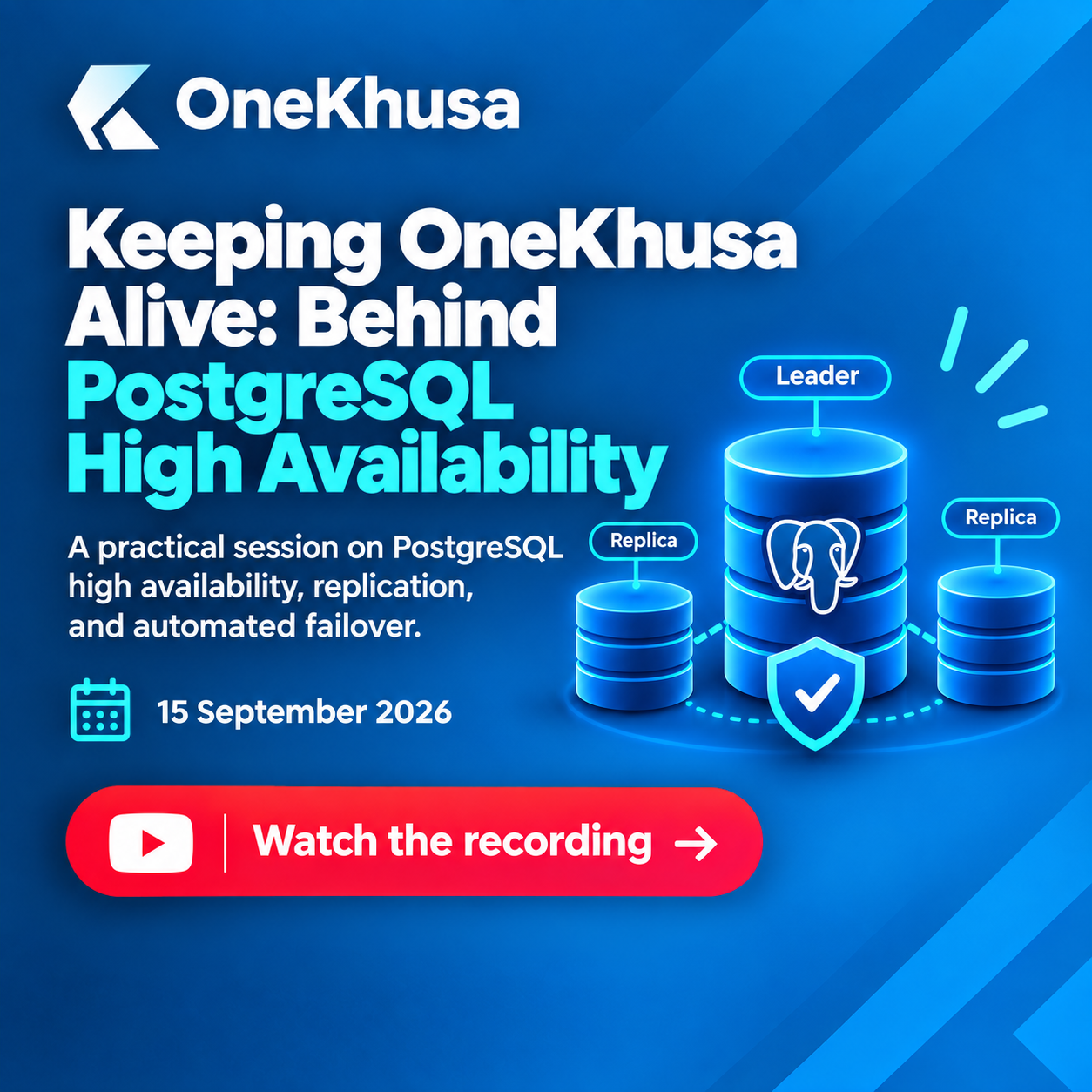
Keeping OneKhusa Available with PostgreSQL High Availability
Database availability is critical for systems that need to remain reliable even when infrastructure fails. In this webinar, we explored how OneKhusa approaches PostgreSQL High Availability to reduce downtime and keep services running.
The session covered the journey from a single PostgreSQL instance to a highly available setup, including the risks of relying on one database node and the limitations of manual failover.
What We Covered
We looked at PostgreSQL replication and how standby servers stay up to date using Write-Ahead Log (WAL) streaming. The session also introduced the difference between asynchronous and synchronous replication.
We then explored the four key components of the high-availability architecture:
- Patroni — manages PostgreSQL and coordinates leader elections.
- etcd — maintains shared cluster state and provides consensus.
- HAProxy — routes traffic to the current PostgreSQL leader.
- Keepalived — provides a floating virtual IP for resilient access.
Finally, we walked through what happens when the active PostgreSQL leader fails—from detecting the failure and electing a new leader to automatically rerouting traffic without requiring manual DNS or connection changes.
▶️ Watch the webinar recording on YouTube: Watch the recording
Whether you work with PostgreSQL, infrastructure, or distributed systems, this session provides a practical overview of how high availability can be designed to handle failures with minimal disruption.
Garry Balala
Software Developer Advocate, OneKhusa

Enjoyed reading this? Share it now.


 (+265)994444455
 payments@khusa.africa